


I once played squash with an investor at a private club in Singapore. I really kinda suck at squash, and knew that my opponent is a regular player — but this was a friendly game, he was in his 60s, I was half his age, and so figured how hard can it be? Surely I won’t be a total wipeout: I can just outrun and outwork him.
My confidence lasted about five minutes. I sprinted, scrambled, and sweated at every point with my tongue sticking out, while my opponent stayed calm and controlled. He barely stepped away from the center of the court, while making me run for all four corners. All my chaotic gameplay, against him moving with surgically precise shots.
Anyways, long story short, he beat me rather badly without even breaking a sweat. But where there’s nothing to earn, there may be something to learn — I saw that he trained specifically to make the best use of his strengths. And I finally realized that working harder won’t work for me for forever. Strategy beats hustle, and the real challenge is to find the smarter game to play.
And in fact, working harder usually only solves the wrong problem faster.
Imagine a lifeguard who spots someone drowning offshore. The shortest path is a straight line, but it’s not the fastest. You can run faster on sand than you can swim in water, so the optimal route involves running most of the way along the shore before swimming the final stretch.
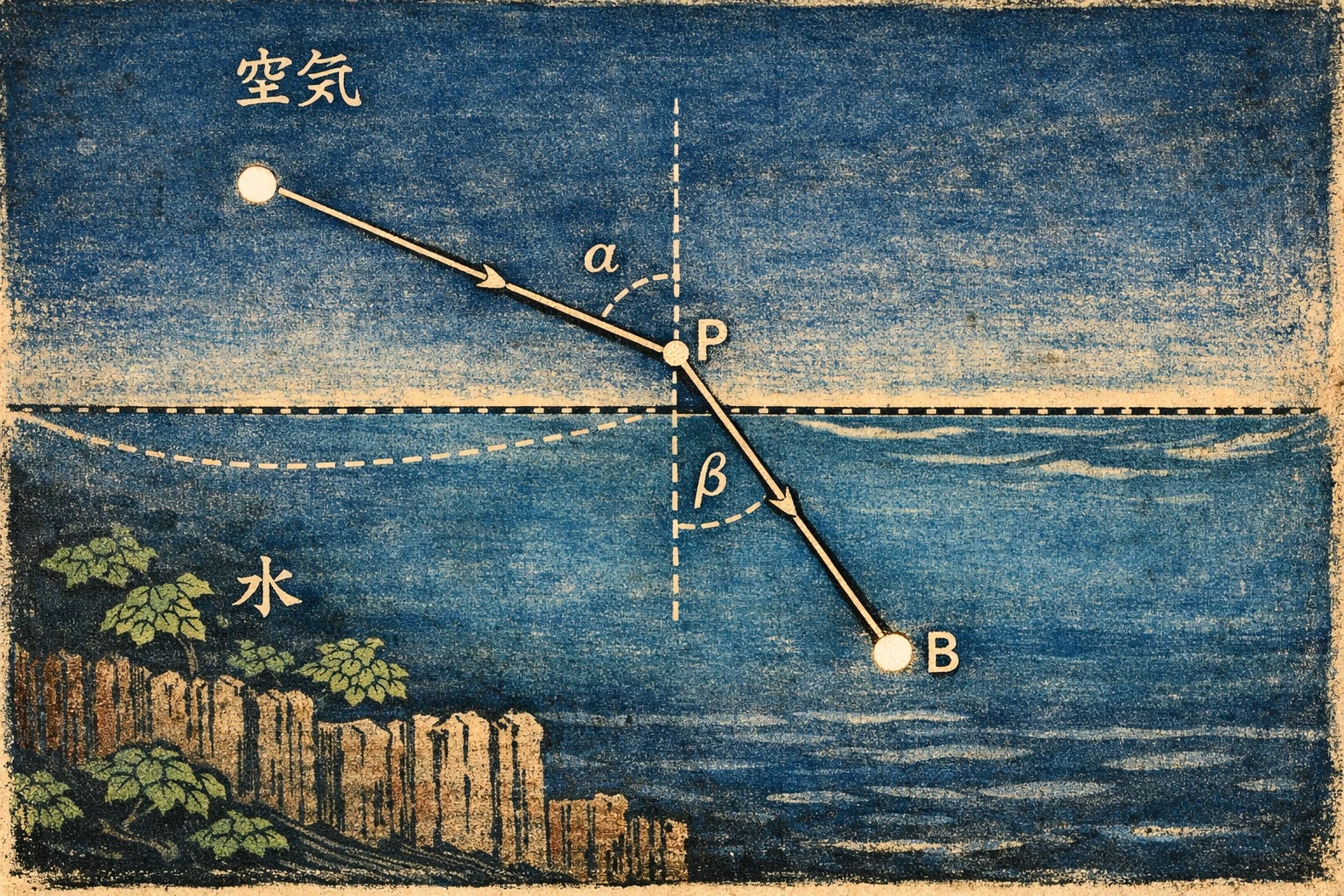
My squash game is a practical demonstration of this classic physics problem: I was the lifeguard who started swimming straight out, and my opponent was running along the shore first.
People instinctively trust brute-force effort because we can see it. We can feel our muscles burn, count the hours worked, even enjoy the sweat. This makes “working hard” feel like real progress, unlike the often invisible work of acquiring skill, or developing strategy.
And of course, our brain needs to justify the effort we put in: We tend to value things more highly if we’ve struggled to achieve them. Even if our hard work leads to a mediocre outcome, we might still overvalue the effort itself, convincing ourselves it was the right approach and maybe we just needed more of it to actually succeed.
We’re also wired for mental shortcuts. As Daniel Kahneman explains in Thinking, Fast and Slow, when faced with a complex question like “What’s the best way to succeed?”, our brains substitute an easier one: “Am I working hard enough?” This heuristic effort feels immediate and actionable—it’s simpler to double down than to step back and potentially change course.
But sometimes (and rather regularly), taking a step back we shall.